Managing Risk in Liquid-Cooled AI Infrastructure using EIS
Why AI Data Centres Are Facing a Cooling Reliability Problem
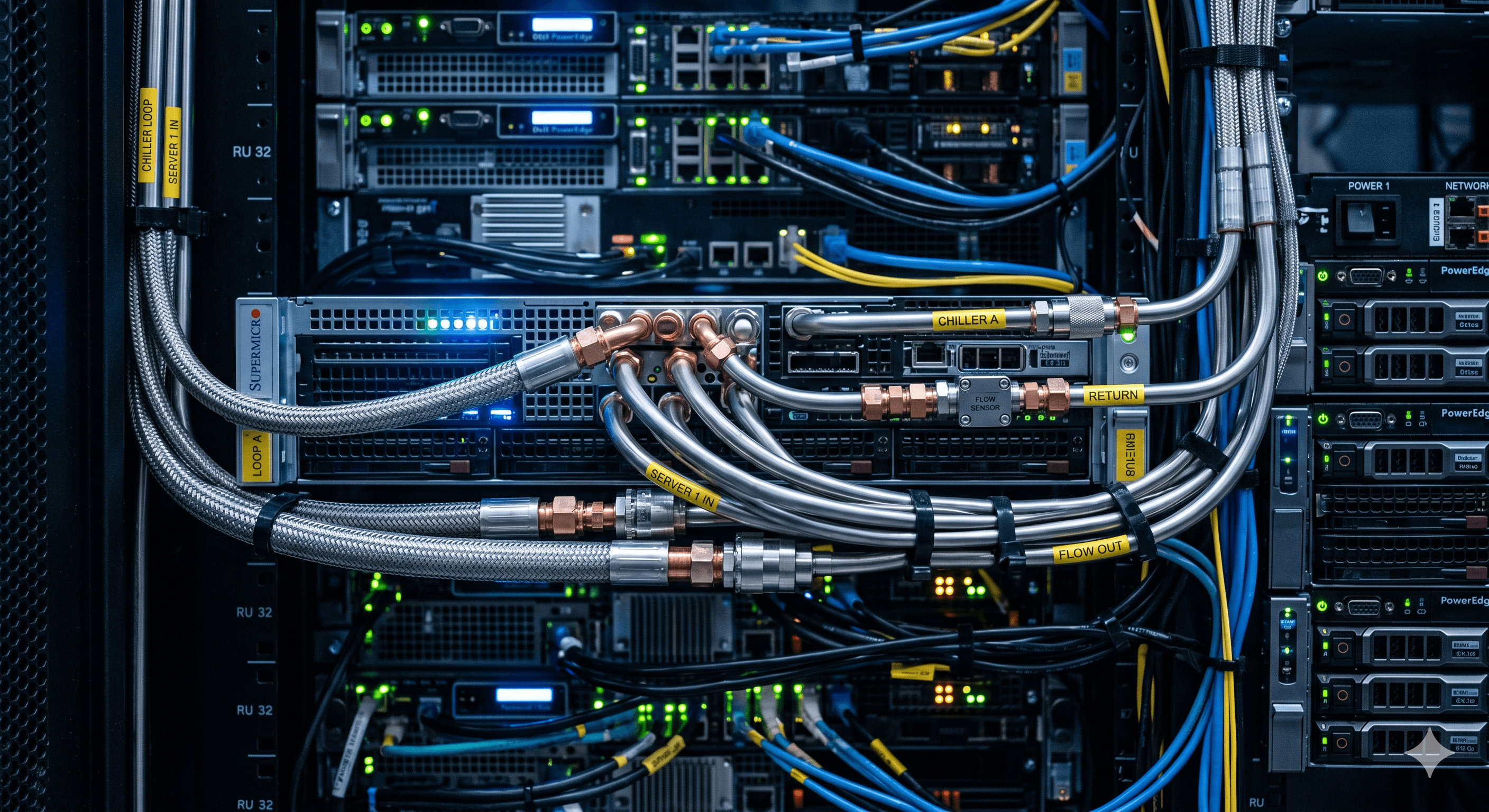
AI infrastructure is pushing liquid cooling systems beyond traditional operating limits. Modern AI racks now operate at 100–250 kW densities, making direct-to-chip and immersion cooling essential for thermal management.
As compute density rises, the risk profile inside cooling loops changes too. Fluid degradation, corrosion, and biofouling can develop rapidly, yet many facilities still rely on periodic manual testing methods that only provide snapshots of fluid condition.
For operators running high-density GPU infrastructure, this creates a serious monitoring gap.
A single cooling failure can damage expensive hardware, interrupt workloads, and create downtime costs estimated at around $9,000 per minute.
What Causes Failure in Liquid-Cooled AI Systems?
Liquid-cooled infrastructure depends on stable fluid chemistry. When coolant composition changes or contaminants build up, thermal performance and system reliability start to fall.
Fluid Degradation
Glycol-based coolants degrade under thermal stress. As temperatures cycle repeatedly, glycol molecules break down into organic acids that increase corrosive activity inside the loop.
This can damage pipework, seals, cold plates, pumps, and heat exchangers over time.
Galvanic Corrosion
Galvanic corrosion occurs when dissimilar metals interact through conductive coolant. Copper, aluminium, stainless steel, and brass components can form electrochemical cells that accelerate material loss.
In high-performance AI environments, even a small leak can place multi-million-pound GPU clusters at risk.
Biofouling and EPS Formation
Microbial contamination is another hidden problem inside cooling infrastructure.
Microorganisms create extracellular polymeric substances (EPS), forming biofilms that reduce heat transfer efficiency and increase under-deposit corrosion. In microchannel cooling systems, early-stage fouling can restrict flow long before operators notice performance loss.
Why Traditional Cooling Monitoring Falls Short
Traditional coolant testing methods were not designed for live AI infrastructure operating around the clock.
Most facilities still depend on:
Manual refractometry
Grab sampling
Periodic laboratory analysis
Operator-led inspections
These methods create blind periods between tests. A coolant issue can develop and spread long before lab results return.
Manual sampling also introduces inconsistency. Results vary depending on timing, operator handling, and sampling location.
For fast-moving degradation events, delayed insight often means delayed action.
What Is Electrical Impedance Sensing?
Electrical Impedance Sensing (EIS) measures how fluids respond to an alternating electrical signal.
Unlike standard conductivity sensors that only measure resistive behaviour, impedance sensing measures both:
Real components linked to conductivity and ion concentration
Imaginary components linked to capacitance and permittivity
This creates a much richer electrical fingerprint of the coolant.
4T2 Sensors applies monochromatic Electrical Impedance Sensing using a single optimised high frequency. This removes many of the noise problems found in traditional frequency sweep systems.
How 4T2 Sensors Improves Cooling Loop Visibility
4T2 Sensors developed a patented inline sensing platform built for continuous industrial deployment.
Instead of relying on intermittent testing, the system continuously measures coolant behaviour within the cooling loop.
Continuous In-Line Monitoring
The sensor installs directly into live infrastructure without requiring manual sample collection.
This provides:
Real-time fluid intelligence
Millisecond response to chemistry changes
Continuous visibility between maintenance intervals
Immediate detection of abnormal fluid behaviour
For AI data centres, continuous monitoring reduces the risk of hidden degradation progressing unnoticed.
Dual-Component Fluid Sensing Explained
A major technical advantage of the 4T2 platform is dual-component sensing.
Real Component Measurement
The real component tracks conductivity and ionic activity inside the fluid. This helps identify:
Glycol concentration drift
Contamination
Corrosion activity
Chemical imbalance
Imaginary Component Measurement
The imaginary component measures capacitance and permittivity changes.
This supports:
Bubble detection
Biofilm identification
Air entrainment compensation
Improved measurement stability
Traditional conductivity sensors often fail when microscopic bubbles pass through the loop. 4T2 Sensors compensate for this interference mathematically in real time.
Experimental Validation
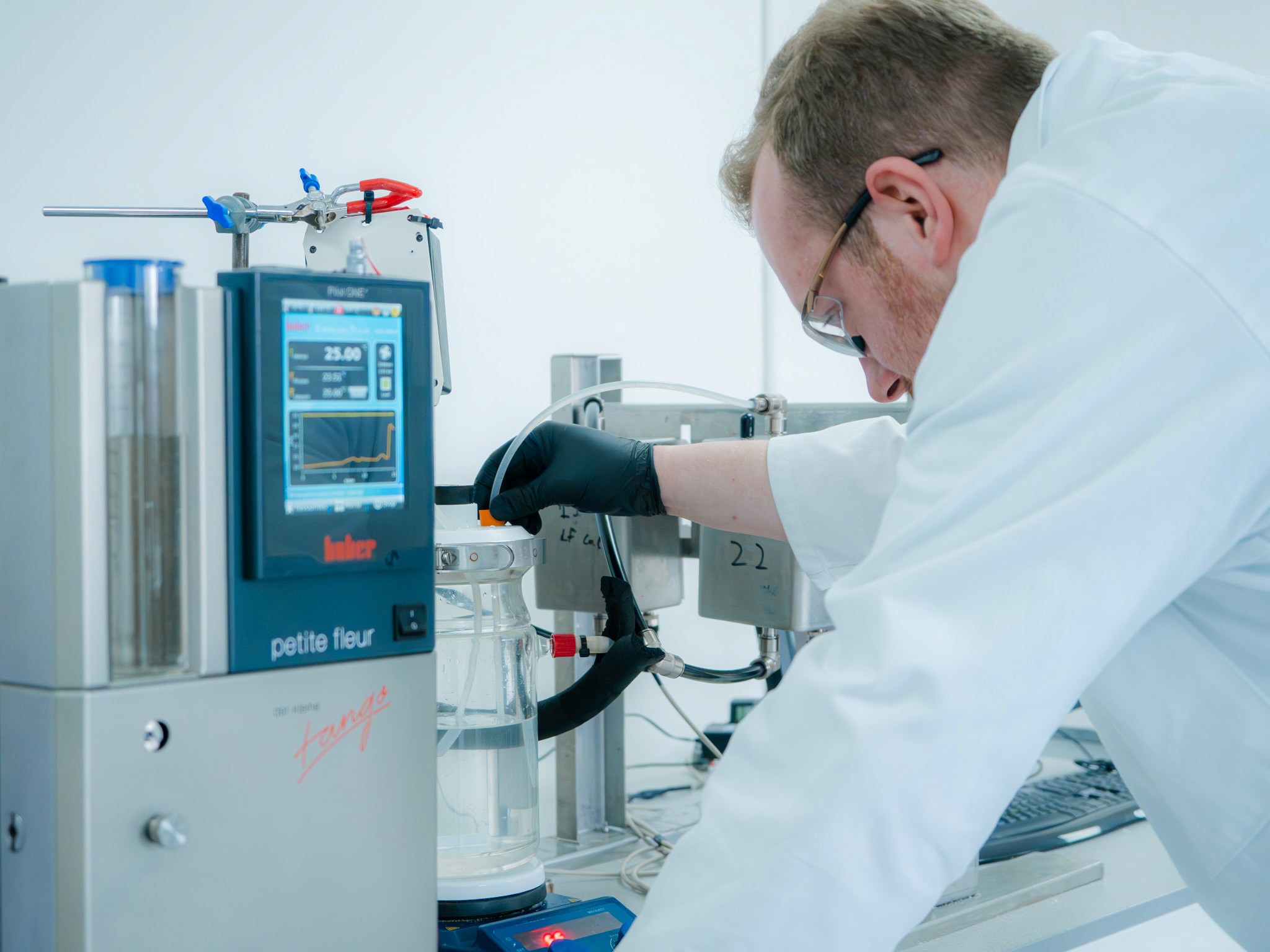
The technology has already demonstrated strong performance across several critical cooling loop risks.
Glycol Composition Monitoring
The platform achieved glycol detection resolution down to 0.06%.
This allows operators to identify dilution problems early, including faulty make-up valves or coolant imbalance, before system protection drops below safe levels.
Corrosion Inhibitor Detection
The system can detect inhibitor concentrations between 50–400 ppm in real time.
This helps confirm the formation of an active protective film within the loop, rather than relying on delayed laboratory analysis.
Early Biofilm Detection
One of the more valuable capabilities is early EPS detection before severe fouling develops.
Detecting biofilm formation early allows maintenance teams to intervene before microchannels clog or corrosion accelerates.
The Operational Value
Continuous fluid intelligence supports both operational uptime and long-term infrastructure protection.
Reduced Downtime Risk
Cooling loop instability can escalate quickly in AI environments operating at high thermal density.
Continuous monitoring shortens response times and reduces the chance of catastrophic cooling failures.
Condition-Based Maintenance
Rather than replacing coolant on fixed schedules, operators can shift to condition-based maintenance.
This may extend coolant service life to 8–10 years while reducing unnecessary replacement costs.
Improved Sustainability Performance
Precise chemistry control also supports better water efficiency.
Higher cycles of concentration (CoC) help reduce water consumption and support EU Water Usage Effectiveness targets of 0.4 L/kWh by 2040.
Why Continuous Fluid Intelligence Matters
AI infrastructure is increasing pressure on cooling reliability, operational uptime, and resource efficiency.
Periodic testing methods leave too many blind spots for facilities operating high-density liquid cooling systems.
4T2 Sensors provides continuous inline fluid monitoring using patented monochromatic Electrical Impedance Sensing technology. By combining conductivity, capacitance, and real-time analytics into a single platform, operators gain earlier warning of degradation, corrosion, and fouling events before they become critical failures.
For modern AI data centres, coolant visibility is no longer just a maintenance issue. It is becoming a core part of infrastructure resilience, efficiency, and operational control.
To understand more details please contact info@4T2Sensors or contact us using this form
Why AI Data Centres Are Facing a Cooling Reliability Problem
AI infrastructure is pushing liquid cooling systems beyond traditional operating limits. Modern AI racks now operate at 100–250 kW densities, making direct-to-chip and immersion cooling essential for thermal management.
As compute density rises, the risk profile inside cooling loops changes too. Fluid degradation, corrosion, and biofouling can develop rapidly, yet many facilities still rely on periodic manual testing methods that only provide snapshots of fluid condition.
For operators running high-density GPU infrastructure, this creates a serious monitoring gap.
A single cooling failure can damage expensive hardware, interrupt workloads, and create downtime costs estimated at around $9,000 per minute.
What Causes Failure in Liquid-Cooled AI Systems?
Liquid-cooled infrastructure depends on stable fluid chemistry. When coolant composition changes or contaminants build up, thermal performance and system reliability start to fall.
Fluid Degradation
Glycol-based coolants degrade under thermal stress. As temperatures cycle repeatedly, glycol molecules break down into organic acids that increase corrosive activity inside the loop.
This can damage pipework, seals, cold plates, pumps, and heat exchangers over time.
Galvanic Corrosion
Galvanic corrosion occurs when dissimilar metals interact through conductive coolant. Copper, aluminium, stainless steel, and brass components can form electrochemical cells that accelerate material loss.
In high-performance AI environments, even a small leak can place multi-million-pound GPU clusters at risk.
Biofouling and EPS Formation
Microbial contamination is another hidden problem inside cooling infrastructure.
Microorganisms create extracellular polymeric substances (EPS), forming biofilms that reduce heat transfer efficiency and increase under-deposit corrosion. In microchannel cooling systems, early-stage fouling can restrict flow long before operators notice performance loss.
Why Traditional Cooling Monitoring Falls Short
Traditional coolant testing methods were not designed for live AI infrastructure operating around the clock.
Most facilities still depend on:
Manual refractometry
Grab sampling
Periodic laboratory analysis
Operator-led inspections
These methods create blind periods between tests. A coolant issue can develop and spread long before lab results return.
Manual sampling also introduces inconsistency. Results vary depending on timing, operator handling, and sampling location.
For fast-moving degradation events, delayed insight often means delayed action.
What Is Electrical Impedance Sensing?
Electrical Impedance Sensing (EIS) measures how fluids respond to an alternating electrical signal.
Unlike standard conductivity sensors that only measure resistive behaviour, impedance sensing measures both:
Real components linked to conductivity and ion concentration
Imaginary components linked to capacitance and permittivity
This creates a much richer electrical fingerprint of the coolant.
4T2 Sensors applies monochromatic Electrical Impedance Sensing using a single optimised high frequency. This removes many of the noise problems found in traditional frequency sweep systems.
How 4T2 Sensors Improves Cooling Loop Visibility
4T2 Sensors developed a patented inline sensing platform built for continuous industrial deployment.
Instead of relying on intermittent testing, the system continuously measures coolant behaviour within the cooling loop.
Continuous In-Line Monitoring
The sensor installs directly into live infrastructure without requiring manual sample collection.
This provides:
Real-time fluid intelligence
Millisecond response to chemistry changes
Continuous visibility between maintenance intervals
Immediate detection of abnormal fluid behaviour
For AI data centres, continuous monitoring reduces the risk of hidden degradation progressing unnoticed.
Dual-Component Fluid Sensing Explained
A major technical advantage of the 4T2 platform is dual-component sensing.
Real Component Measurement
The real component tracks conductivity and ionic activity inside the fluid. This helps identify:
Glycol concentration drift
Contamination
Corrosion activity
Chemical imbalance
Imaginary Component Measurement
The imaginary component measures capacitance and permittivity changes.
This supports:
Bubble detection
Biofilm identification
Air entrainment compensation
Improved measurement stability
Traditional conductivity sensors often fail when microscopic bubbles pass through the loop. 4T2 Sensors compensate for this interference mathematically in real time.
Experimental Validation
The technology has already demonstrated strong performance across several critical cooling loop risks.
Glycol Composition Monitoring
The platform achieved glycol detection resolution down to 0.06%.
This allows operators to identify dilution problems early, including faulty make-up valves or coolant imbalance, before system protection drops below safe levels.
Corrosion Inhibitor Detection
The system can detect inhibitor concentrations between 50–400 ppm in real time.
This helps confirm the formation of an active protective film within the loop, rather than relying on delayed laboratory analysis.
Early Biofilm Detection
One of the more valuable capabilities is early EPS detection before severe fouling develops.
Detecting biofilm formation early allows maintenance teams to intervene before microchannels clog or corrosion accelerates.
The Operational Value
Continuous fluid intelligence supports both operational uptime and long-term infrastructure protection.
Reduced Downtime Risk
Cooling loop instability can escalate quickly in AI environments operating at high thermal density.
Continuous monitoring shortens response times and reduces the chance of catastrophic cooling failures.
Condition-Based Maintenance
Rather than replacing coolant on fixed schedules, operators can shift to condition-based maintenance.
This may extend coolant service life to 8–10 years while reducing unnecessary replacement costs.
Improved Sustainability Performance
Precise chemistry control also supports better water efficiency.
Higher cycles of concentration (CoC) help reduce water consumption and support EU Water Usage Effectiveness targets of 0.4 L/kWh by 2040.
Why Continuous Fluid Intelligence Matters
AI infrastructure is increasing pressure on cooling reliability, operational uptime, and resource efficiency.
Periodic testing methods leave too many blind spots for facilities operating high-density liquid cooling systems.
4T2 Sensors provides continuous inline fluid monitoring using patented monochromatic Electrical Impedance Sensing technology. By combining conductivity, capacitance, and real-time analytics into a single platform, operators gain earlier warning of degradation, corrosion, and fouling events before they become critical failures.
For modern AI data centres, coolant visibility is no longer just a maintenance issue. It is becoming a core part of infrastructure resilience, efficiency, and operational control.
To understand more details please contact info@4T2Sensors or contact us using this form
More Works More Works
EXPLORE MORE KEEP READING